
 The Behavioral Assessment and Research System (BARS) is a system of standardized and new neurobehavioral performance tests. BARS was designed for population-based research to detect adverse nervous system effects in a work group exposed to a chemical when compared to a control group that did not have such an exposure. To this day, it is one of the two most widely-used testing systems to detect neurotoxicity in adults, and it has now been extended to research with children.
The primary benefits of BARS:
- Includes tests of attention, memory, learning motivation, complex function, response speed and coordination. See BARS Tests.
- Available in English, Spanish, Thai, and Arabic languages. Can be extended to other languages at a modest cost.
- Developed with simple, clear instructions (spoken optional) and practice that fully replace Examiner explanations on how to perform the tests for most adults with 10 or more years of education
- BARS can be used with populations with limited or even no education or fluency by using the spoken language option
- Up to 10 people can be tested simultaneously by one Examiner (less if education below 10 years)
- Ages successfully tested: 4-91
- BARS tests have modifiable parameters (eg, number of trials, stimulus shape, inter-stimulus intervals, instruction language, practice trials, test difficulty levels, delays)
- Poker chip dispenser available as feedback/reinforcer for children
Since 1990, BARS software and the hardware to run it has been developed and evolved by Drs. Kent Anger and Diane Rohlman at Oregon Health & Science University (OHSU) in Portland, OR. In June 2007, NwETA became the exclusive licensee to market BARS; OHSU has the copyright to the software. NwETA negotiated that agreement in order to provide a secure long-term financial base for BARS.
System Requirements
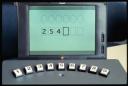 BARS 4.0pc is run on computers with Windows XP operating systems. All BARS 4.0pc tests are now operational and in use b y Drs. Rohlman and Anger and partners in 4 continents. BARS runs on Windows Vista and 7. It requires our 9BUTTON unit (right) to collect research-grade data.
The BARS 4.0pc Manual lists the main features of the BARS software.
Learn about how to conduct a research study of neurotoxicity using BARS on this site, with references.